Google Data Centers
Role → UX Strategist
Timeline →July - October 2024
Agency → Instrument
Client → Google
01
Project Overview 🔍
Ask
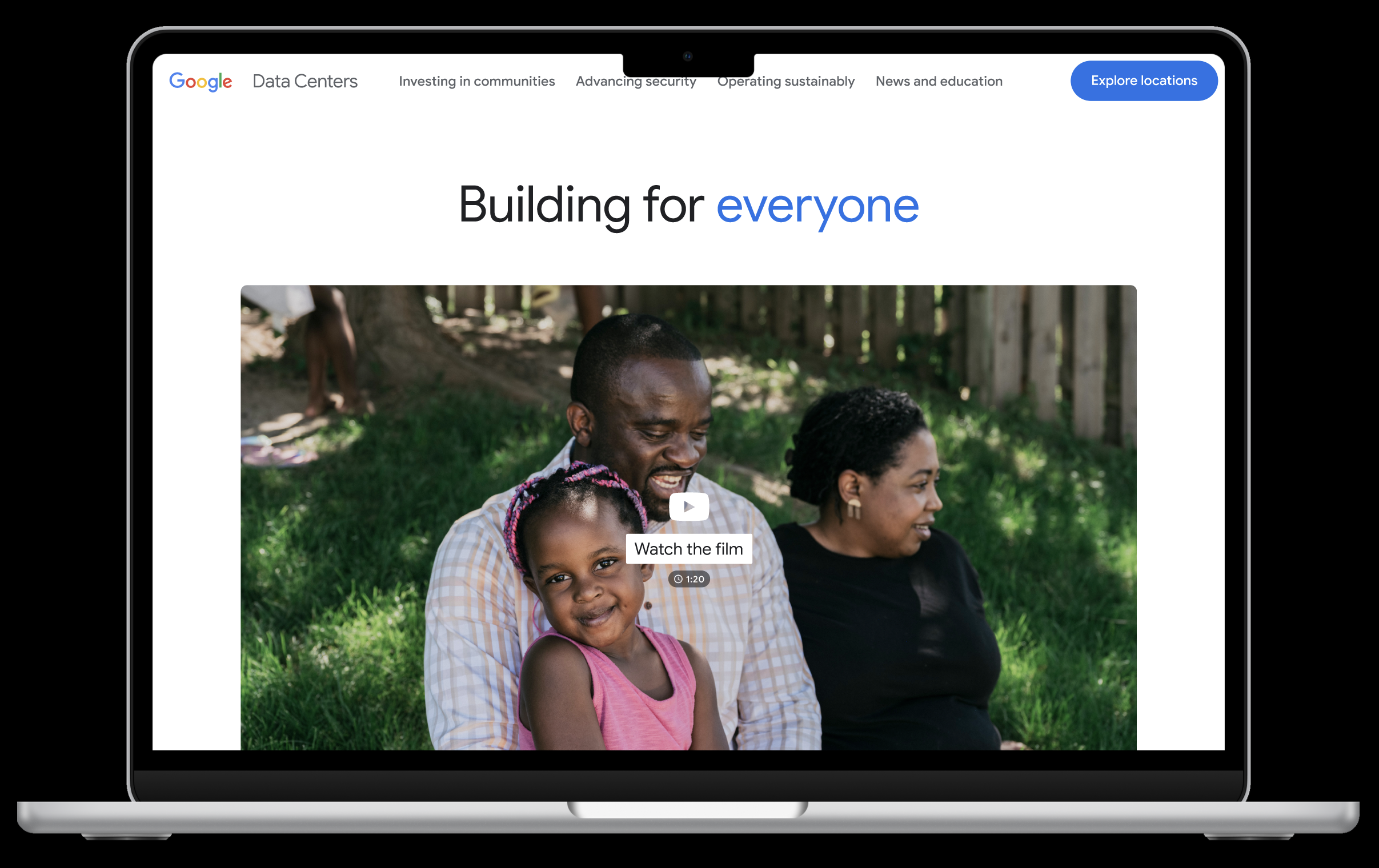
Create a dynamic website that tells our audience why Google data centers matter and how they benefit our communities - through stories, simple and engaging content, and our strategic pillars.
Timeline
This was a longer project that involved an end-to-end multi-disciplinary process. At a high-level, we had six main phases:
Kickoff & Immersion
Strategic Approach
UX & Design Concepting
Detailed Design
Development & CMS integration
Final Handoff
Role & Responsibilities
Due to the length and nature of this project, we had a larger delivery team consisted of a strategy lead and a ux design strategist (me), a visual designer and a design director, two developers and a copywriter. I worked in close collaboration with the entire team through the project process.
Co-led the strategic approach phase
Co-led the ux strategy and detailed design and concepting phases
Supported writers and developers through the development and CMS integration phases
02
The Audience 👥
This site was created for a range of audiences who each have a unique vested interest in Google’s data centers (GDCs). To simplify our process, we bucketed our audiences into four main categories according to their priority.

Across all audiences, we observed the following shared concerns and misperceptions that they have about GDCs:
Concerns about community impact
Concerns about air and noise pollution, disruption of local landscapes, limited jobs, and lack of community involvement and its effect on residents.
Skepticism about economic effects
Skepticism regarding transient workers increasing cost of living, lost revenue from tax incentives and inability to support community growth.
Fears about environmental issues
Fears over energy and water consumption and how DC’s negatively affect the environment both locally and globally.
Distrust around privacy & security
The vast quantity of data stored raises concerns about potential privacy violations and data breaches.
03
The Opportunity 💡
To address these user concerns and misperceptions, we elevated GDCs messaging pillars to tell their story across the site.
Concerns about community impact
↓
Investing in communities
Collaborating with each community to provide long-term support through grands, educational programs, and other initiatives.
Skepticism about economic effects
↓
Accelerating the economy
Bringing more economic activity, new businesses, and growth opportunities to the communities we call home.
Fears about environmental issues
↓
Innovating sustainable solutions
Driving advancements in sustainability every day by accelerating the clean energy transition, continually improving efficiency, and preserving critical natural resources.
Distrust around privacy & security
↓
Advancing vital infrastructure
Building the necessary infrastructure of tomorrow to support connection, digitization, and prosperity.
Our approach was to bring the messaging pillars front and center to organize content and guide storytelling as well as infuse a narrative of positive community impact throughout the website.
While also using the following principles to help guide the ux and design:
Highlight community voices through photography, storytelling, quotes
Show the numbers putting proof points behind any claims we make with stats and figures demonstrating impact
Celebrate each location by elevating their story throughout and making community specific details easily accessible
04
Site Goals ⭐️
Northstar
To drive trust, curiosity, and immediate understanding around why Google Data Centers matter to communities and the value they bring on a more human scale.
Website goals
As GDC’s website is centered on community, the following goals outline how we’ll serve them:
Build trust by authentically addressing community concerns and show how we’re mitigating them with real stories representing clear benefits.
Spark a sense of awe by pulling back the curtain on an otherwise “secret” topic and make learning about Data Center’s fun and interesting.
Foster engagement by making it easy to discover stories, programs, trainings, jobs etc.
Create a resource that audiences will come back to for community updates or latest tech innovations.
05
Navigation / IA 🏁
The information architecture we created is catered to community members and KOF’s, accommodating their many different mindsets and actions they’ll want to take while on the site.
Understand the impact of GDC on community and environment
Learn about the foundations of GDC’s and how they operate
Discover how Google can help them on a local level (grants, programs, trainings)
Apply for jobs, programs, trainings
Explore what’s happening in their community
Stay informed about the latest news and developments
Main Navigation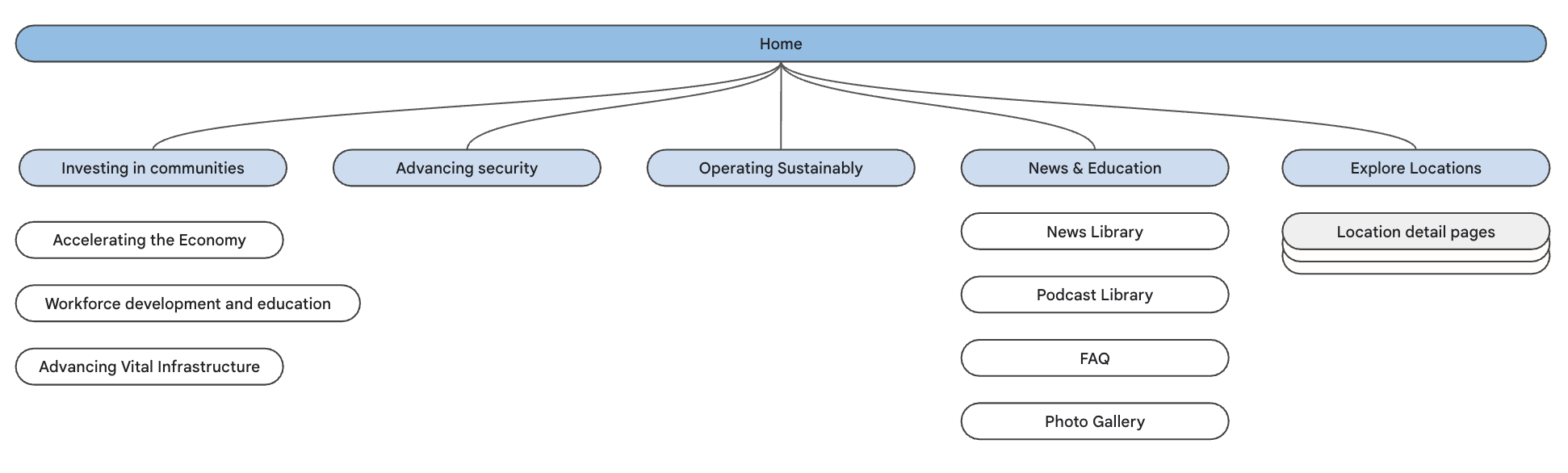
This section lays out the benefits of data centers at a high-level. The main nav label intentionally references ‘communities.’
This section speaks to privacy & data security.
This section provides information about how GDC’s operate in an environmentally responsible way.
This section provides more information about data centers and how they work as well as housing news and key content series.
This section provides access to all data center locations and detailed pages for each.
Footer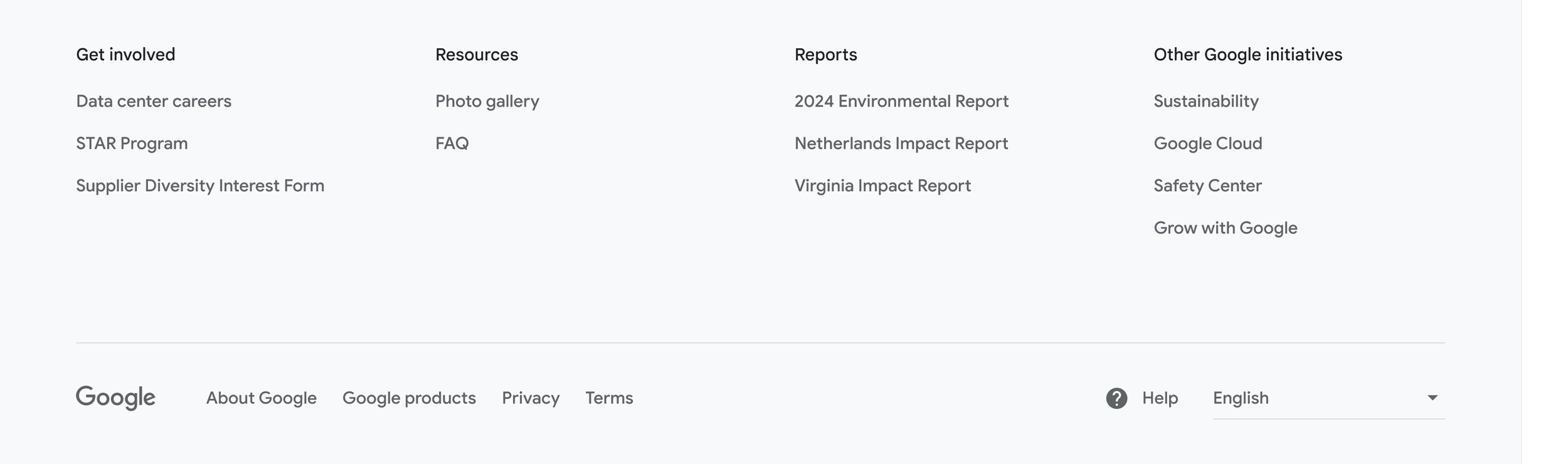
Provides easy access to engage with GDC, exposing tertiary pages on the site
Exposes some pages not visible in main or secondary nav
Provides entry points to the environmental and impact reports
Cross-links to relevant Google initiatives
Note: The labels within the main navigation and footer along with some of the copy are slightly altered on the live site and a careers page (that we worked on but were asked to move to the footer during our project) was added to the main navigation post-handoff.
05
Early Design 🎨
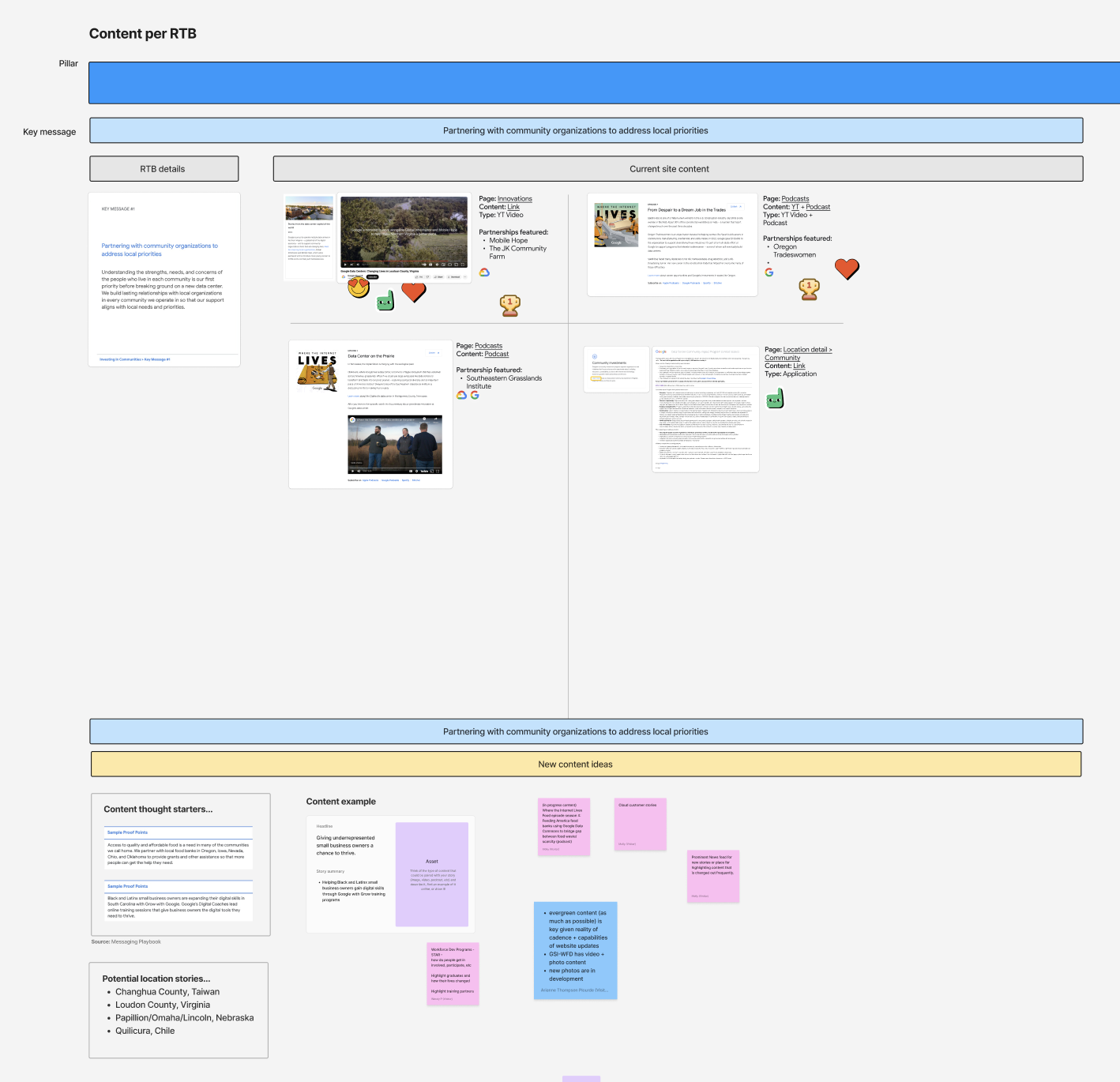
After finalizing the IA, we started working on the page role, narrative and content strategy. In order to get a better understanding of content with our limited timeline, we conducted workshops with clients and key stakeholders to brainstorm content prioritization and ideas for each GDC pillar and their respective sub-pillars
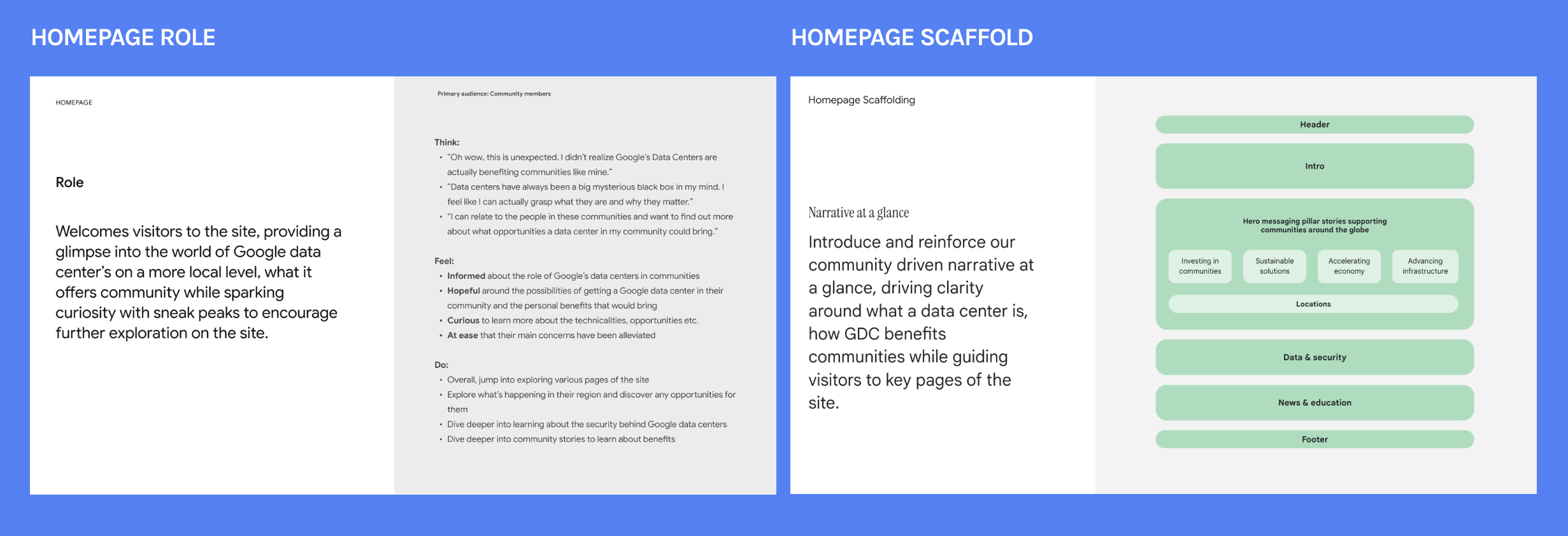
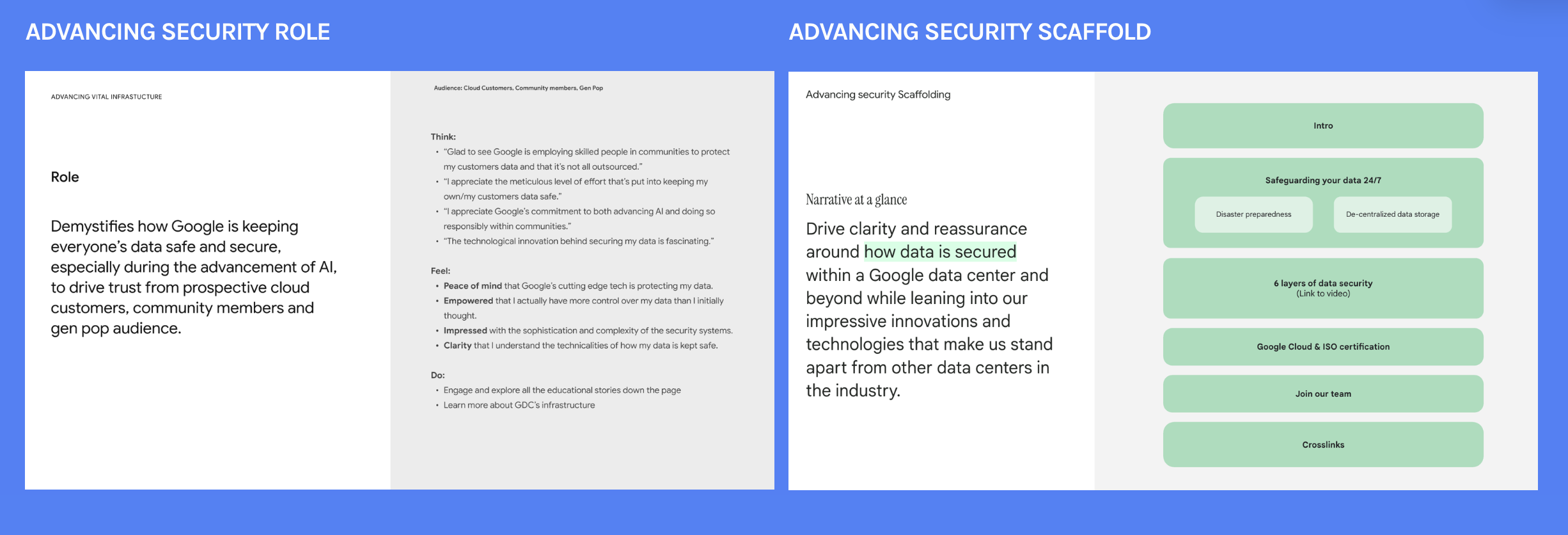
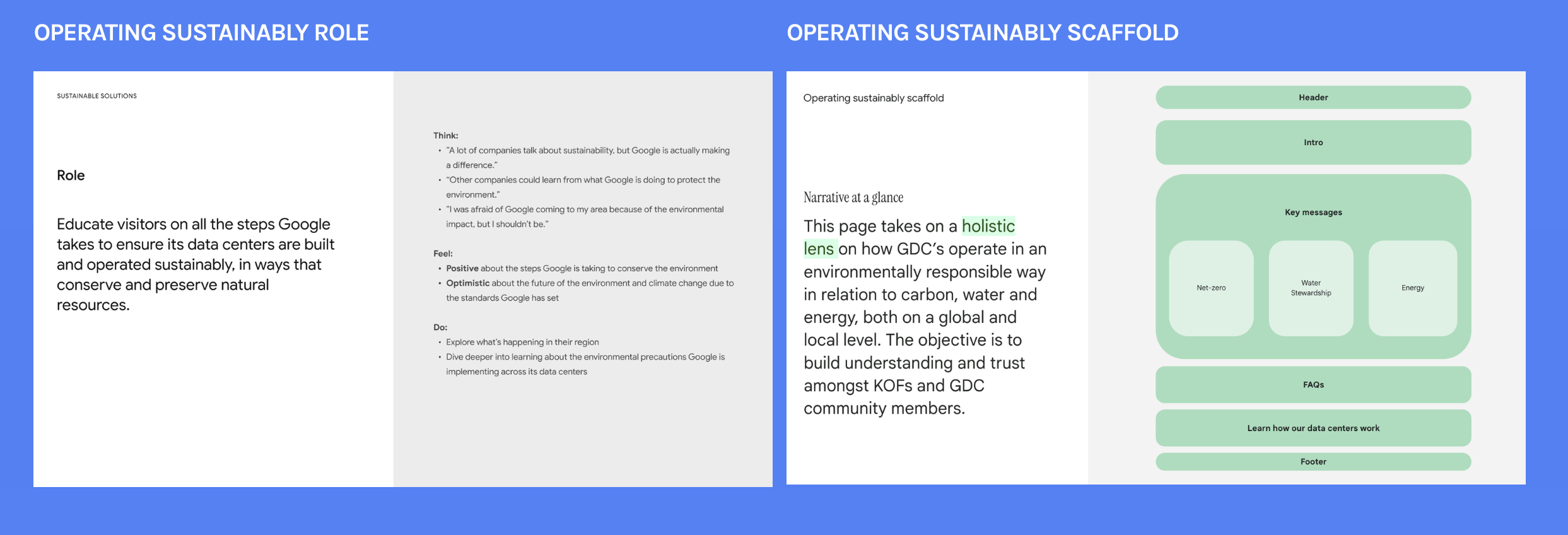
After we had a better idea of the content needs, we started creating lo-fi content scaffold diagrams for each page to determine the hierarchy and content that would live on these pages. These lo-fi scaffolds were then quickly translated into hi-fi design options using existing components from the CMS library (Brightspot Next) we were using as well as a handful of custom components we developed. The following are a few of the scaffold we created.
07
Final Designs 🚀
After various rounds of iteration and several conversations with key stakeholders, we landed on final page designs for the Google data center website, some of which are showcased below. I collaborated very closely with the rest of the designers and writing team to refine the copy and design of these pages, reminding them of the northstar, page narrative and roles, principles and content strategy to help guide the work forward. To view all the pages, visit the google data center site to see all of our designs live and in action!
HOMEPAGE

ADVANCING SECURITY

OPERATING SUSTAINABLY

A moment to reflect…
The site went live a few months after we handed off our final designs to Google. Comparing what’s live now to the designs we created, it’s clear that our work was a success among Google stakeholders.
💬 Seek out feedback early and iteratively
The trouble with most of us is that we would rather be ruined by praise than saved by criticism. Keeping the stakeholders and team involved as early as possible saves a huge amount of time and re-doing work.
🔓 Don’t let your role/title limit you
I worked on a cross-functional team of UX designers, producers, writers, developers, etc and I noticed myself jumping into work that I wouldn’t normally engage with. I worked on page copy for some of the pages and authored content for a few pages within the CMS we were using. I learned a lot from this process and genuinely found skills that I would like to build on moving forward!
More Case Studies